Why Do I Crash at 3PM Every Day? How to Beat the Afternoon Slump Naturally
Share
If your brain completely powers down every afternoon, welcome to the busy brain club 🫠
One minute you’re productive.
The next?
- staring blankly at your laptop
- rereading the same sentence
- craving another coffee
- wondering how it’s only 3:12pm
The 3pm crash is incredibly common - especially for busy professionals, ADHD brains, students, parents, and anyone trying to function in modern life with 47 tabs open.
The good news?
Your afternoon energy crash probably isn’t because you’re lazy or unmotivated.
Here’s what’s actually happening - and how to support your focus and energy naturally.
What Causes the 3PM Crash?
The “3pm crash” (also called the afternoon slump or afternoon energy crash) happens because of a combination of biology, mental fatigue, and overstimulation.
1. Your Energy Naturally Dips in the Afternoon
Your body follows circadian rhythms - your natural internal clock.
For many people, energy and alertness naturally dip between 1pm and 4pm, which can lead to:
- afternoon brain fog
- low motivation
- reduced concentration
- tiredness after lunch
- cravings for sugar or caffeine
So if your brain feels like it suddenly switched to low power mode around 3pm… that’s not unusual.
2. Too Much Coffee Can Make the Crash Worse
We love coffee. Respectfully.
But relying on multiple coffees to survive the workday can create a cycle:
- quick energy boost
- rising stress or jitters
- sudden energy dip
- repeat
For some people, caffeine can support focus.
For others, it can feel like:
- anxiety with a side of productivity
- shaky concentration
- hyperfocus followed by burnout
That’s why many people are now looking for calmer, more balanced energy support instead of simply increasing caffeine intake.
3. Your Brain Is Overloaded
Modern brains are dealing with a lot:
- notifications
- multitasking
- constant stimulation
- decision fatigue
- mental load
- endless context switching
For ADHD and neurodivergent brains especially, this mental overload can make afternoon brain fog feel even worse.
Sometimes the problem isn’t laziness.
Your brain is just exhausted.
How to Stop the Afternoon Energy Crash Naturally
There’s no magic fix (we wish), but small habits can make a big difference.
1. Support Focus Without Overstimulating Your Brain
The goal isn’t necessarily “more energy.”
It’s steadier energy.
That’s why ingredients like caffeine + L-theanine have become popular for people looking for smoother focus and calmer alertness without the jittery chaos spiral.
L-theanine is often paired with caffeine because it may help promote a more balanced feeling of focus.
2. Simplify Your Wellness Routine
Let’s be honest:
If your supplement routine requires seven powders, three capsules, and a level of organisation you simply do not possess… it’s probably not happening consistently.
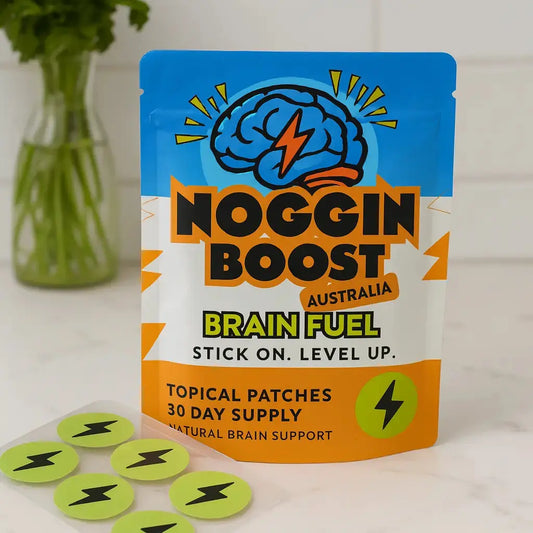
That’s one reason we created Noggin Boost.
Noggin Boost is a simple daily patch designed to support focus, clarity, and clean energy in a low-maintenance way.
No pills.
No powders.
No afternoon crash drama.
Just stick it ⚡️
3. Reduce Mental Overload Where You Can
Sometimes supporting focus has less to do with “hustling harder” and more to do with reducing friction.
Small things can help:
- taking short movement breaks
- reducing notifications
- time blocking tasks
- staying hydrated
- avoiding caffeine overload
- simplifying routines
Your brain wasn’t designed to process constant stimulation all day long.
Signs You Might Be Experiencing an Afternoon Slump
You might be dealing with a 3pm crash if you regularly:
- lose focus in the afternoon
- crave sugar or caffeine around 3pm
- feel mentally exhausted after lunch
- struggle with brain fog at work
- reread things multiple times
- lose motivation late in the day
- feel productive in the morning but depleted later
If that sounds familiar - you’re definitely not alone.
FAQ: The 3PM Crash
Why do I always feel tired at 3pm?
Many people experience a natural afternoon dip in alertness due to circadian rhythms, mental fatigue, stress, overstimulation, or caffeine crashes.
Does caffeine cause afternoon crashes?
It can for some people. Large amounts of caffeine or repeated coffee spikes throughout the day may contribute to energy crashes later on.
What helps with afternoon brain fog?
Things like hydration, balanced meals, movement, reduced mental overload, and steadier energy support may help improve afternoon focus.
How can I improve focus naturally?
Many people focus on:
- better sleep
- stress management
- consistent routines
- balanced caffeine intake
- focus-support ingredients like caffeine + L-theanine
Final Thoughts
If your brain checks out every afternoon, you’re not broken - you’re probably overstimulated, overloaded, and running on fumes.
Modern life asks a lot from our brains.
The goal isn’t becoming a productivity robot.
It’s finding realistic ways to support your energy and focus without adding even more chaos to your routine.